

Kwaxala
Indigenous nature regeneration network
Kwaxala — named for k̲̓wax̲a̲la, meaning forest in Kwak'wala — is an Indigenous nature regeneration network that takes genuinely at-risk forests, legally protects them, and returns them to the regenerative care of their ancestral guardians as profitable living forests. I joined the founding team in 2023, focusing on organizational design, governance architecture, and culture development to center Indigenous sovereignty and ecological restoration while mobilizing investment into living natural systems.
The network's model converts extractive forestry licenses into regeneration rights, generating revenue from carbon and ecosystem services rather than timber extraction. Indigenous Forest Partners hold fixed majority equity in Kwaxala, with over 90% of revenue remaining in partner communities.
Highlights
- Prepared for pilot on Kwiakah First Nation ancestral territory in the Southern Great Bear Rainforest, British Columbia
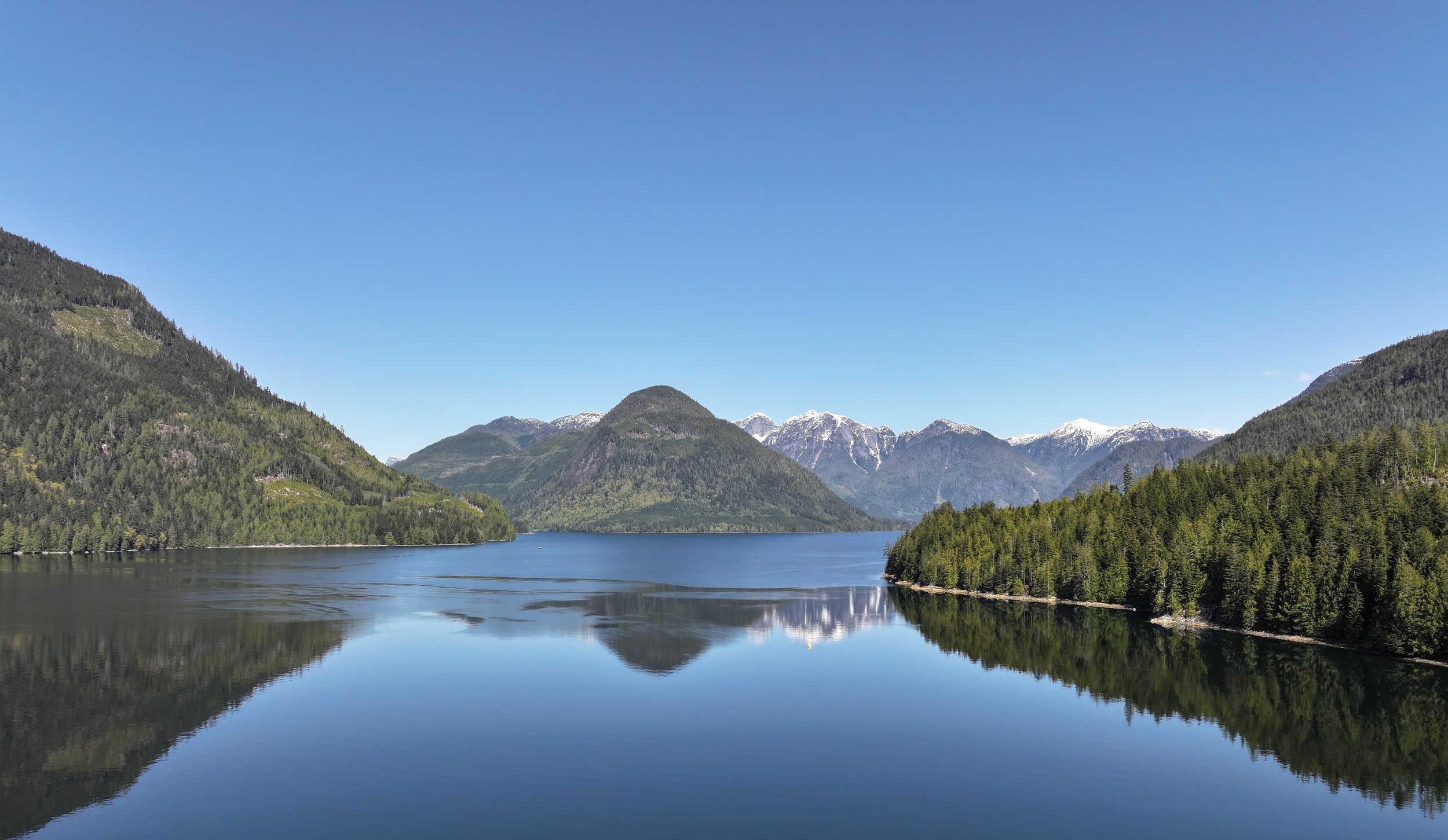
- M̓ac̓inuxʷ Special Forest Management Area established across 140,000 acres (55,000 hectares) of coastal rainforest, transformed from extraction to regeneration
- An additional ~230 hectares of private land purchased, effectively doubling protection in Kwiakah territory
- Tripartite agreement signed between Kwiakah First Nation, Province of BC, and Interfor
- Indigenous Forest Partners hold fixed majority equity with over 90% of revenue remaining in communities
- Supported by Nature United, BC Parks Foundation, Nature Conservancy of Canada, and Makeway Charitable Society
- Living Forest Shares model enabling mindful investors to participate in forest regeneration
Centree Development
I contributed to early-stage development of Centree, Kwaxala's ecological indexing and regenerative finance protocol. This system introduces a novel measurement unit (the Centree) and token-backed mechanism to quantify and value ecosystems based on regenerative capacity rather than carbon alone. My work encompassed messaging strategy, ecosystem framing, and conceptual alignment.
I voluntarily transitioned from the founding team in 2024 as the M̓ac̓inuxʷ Special Forest Management Area — a coastal rainforest project on Kwiakah territory — was preparing for its pilot, leaving the project in strong hands as it moved into full development.
"We are asserting our inherent responsibilities and creating an Indigenous-led conservation economy that will steward and heal our territory while allowing our people to thrive." — Chief Steven Dick, Kwiakah First Nation
Video
Key Contributions
- Organizational and systems architecture for a novel Indigenous-majority ownership model
- Governance design aligned with Indigenous equity and territorial sovereignty
- Strategic messaging for Kwaxala and Centree regenerative finance protocol
- Cultural design for network collaboration across ecological, financial, legal, and cultural layers
- Systems mapping across stakeholder groups spanning First Nations, government, conservation, and investment
Acknowledgements
Chief Steven Dick (Chairman, Kwiakah First Nation), Pete Corke (Vision & Leadership), Frank Voelker (Forest Partnerships), Alex Gordon-Brander (Regenerative Finance & Tokenization), Shawn Anderson (Technology & Token Engineering), Darren Zal (Systems Architect), Amanda Dick (Board), Gavin Woodburn (Indigenous Science Advisor), and Jody Holmes (Conservation Systems Strategist).